Figuring out what to wear to a wedding over 50 often starts in front of an open closet. The wedding invitation is on the counter and the date is circled. The dress you wore to the last wedding feels wrong for this one: too short, too warm, or snug across the shoulders now. On top of that, “cocktail attire” seems to mean something different every time.
Here is the short answer. Let the invitation tell you how dressy to go. Then pick an outfit you can sit, stand, eat and dance in from the ceremony to the last song. A midi dress, a dressy pantsuit, a jumpsuit and a floor-length gown can all be the right choice. The dress code, the time of day and the venue decide which one fits this wedding.
This guide explains each wedding guest dress code in plain words, with a quick table you can check before you shop. After that come shapes, fabrics, colors and shoes for every season, plus the few etiquette rules that still matter. By the end, you will know what to wear and why it works.
What to Wear to a Wedding Over 50 Starts With the Invitation
The wedding invitation is your best guide to how formal to dress. The dress code, the start time and the venue together set the level of dressiness. That level shapes your outfit far more than your age does, so read the invitation closely before you buy anything.
When the Dress Code Is Printed
A wedding guest dress code is a short phrase on the invitation, such as “black tie” or “cocktail attire,” that tells guests how formal to dress. Treat it as your starting point, then check two more details. The start time matters, because the same code reads dressier at 7 p.m. than at 1 p.m. The venue matters too. A ceremony in a house of worship may expect covered shoulders, closed-toe shoes or a head covering, depending on the faith and local custom.
When There Is No Dress Code
Look at the clues the couple left. A ceremony that starts after 5 p.m. usually means formal evening wear, and a morning ceremony is usually more relaxed. A hotel ballroom points dressier than a backyard or a barn. Check the couple’s wedding website, since many list attire in the FAQ. If you are still unsure, go one step dressier than you think. A midi dress or a dressy pantsuit in a good fabric fits most weddings.
When You’re Close Family of the Couple
An aunt, grandmother or godmother stands closer to the front and shows up in more photos. Ask the couple about their wedding colors before you shop, so your outfit looks good in the family portraits. Skip the exact shade the bridesmaids are wearing unless the couple asks for it. A half step dressier than the other guests shows respect for your role.
Wedding Guest Outfits for Women Over 50, by Dress Code
Each dress code points to a clear set of outfits. Black tie calls for a floor-length gown or a very dressy cocktail dress. Cocktail and semi-formal call for a dress, jumpsuit or dressy pantsuit at knee to midi length. Casual weddings allow lighter dresses and dressy separates.
Black Tie
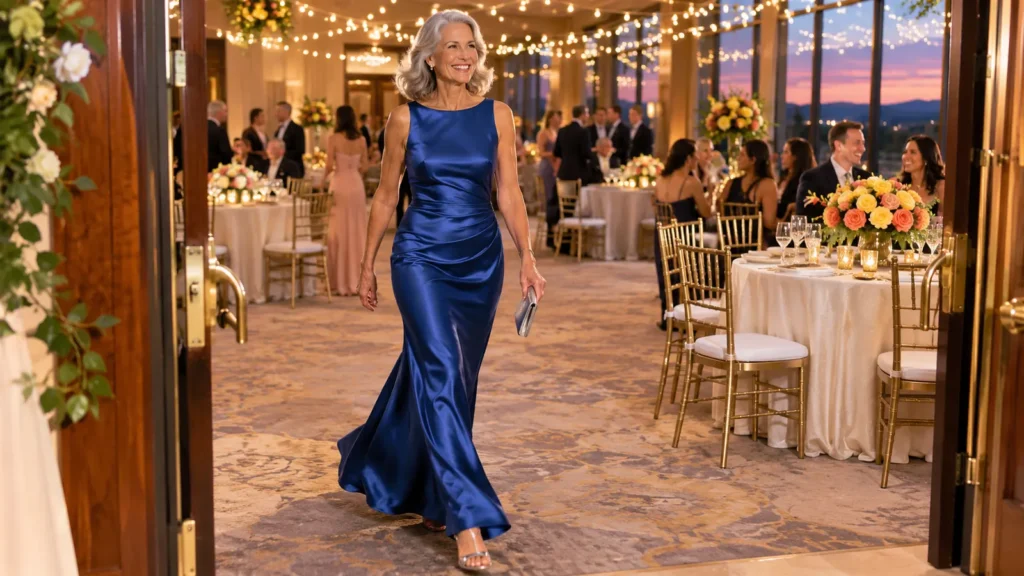
Black tie is the most formal dress code most guests will ever see on an invitation. A floor-length gown is the safest choice. A short, very dressy cocktail dress is also correct, as long as the fabric looks like evening wear. Satin, velvet, heavy crepe and beaded details all feel right here. Plain separates usually read too casual for black tie.
Formal or Black Tie Optional
Black tie optional means formal evening wear is welcome but not required. Men may choose a tuxedo or a dark suit. Your options are wider than at black tie: a long dress, a dressy midi, or polished dressy separates. One example is a silk blouse with wide-leg pants in satin. An invitation that says only “formal” sits in the same zone.
Cocktail and Semi-Formal
Cocktail attire is the dress code you will see most often. It means a dressy outfit that usually falls between the knee and mid-calf. Semi-formal is a small step more relaxed, especially in the daytime. A daytime semi-formal wedding suits a dressy afternoon dress, a suit or a pantsuit. An evening semi-formal wedding suits a cocktail dress or a dressy pantsuit. A crepe midi dress, a jumpsuit or a tailored pantsuit with a silk top all work.
Casual, Garden and Beach
A casual wedding still asks for an outfit chosen for the day, not the errand run. Garden weddings happen outdoors in daylight, so color and floral prints feel at home. Try a chiffon or cotton midi dress, or a pleated midi skirt with a pretty blouse. For a beach wedding, linen and flowing maxi dresses stay cool, and flat sandals keep you steady on sand. Leave the denim and sneakers at home unless the couple asks for them.
Dresses, Pants or a Jumpsuit: All Three Belong at a Wedding

If you feel more like yourself in pants, wear them. A dressy pantsuit or a jumpsuit is correct at almost every wedding, from a garden party to black tie optional. The fabric, the fit and the finish make an outfit wedding-ready, not whether it has a skirt or two legs.
A pantsuit is a matching jacket and pants worn as one outfit. For a wedding, choose one in crepe or satin and wear a silk top underneath, so it reads as evening wear instead of office wear. Wide-leg pants (called trousers in the UK) move well on the dance floor and look polished with a block heel.
A jumpsuit gives you the ease of pants in a single piece, so nothing comes untucked during dinner. Look for a defined waist and a fabric that drapes softly.
Dressy separates are a third route. Try a silk blouse with a pleated midi skirt, or a sequin top with satin pants. If you keep going back and forth, our guide to dresses vs pants over 50 helps you work out which one suits your life. At a strict black tie wedding, a gown is still the safest choice.
Wedding Guest Dresses Over 50: Finding a Shape You Love

Three dress shapes cover most weddings: the wrap, the A-line and the sheath. Each one fits the body differently. The best choice depends on where you want room, where you want shape, and how much of the day you will spend sitting.
Wrap and A-Line Dresses
A wrap dress closes with a tie or a crossover front, so you control how snug the waist feels. An A-line dress fits through the top and widens gently from the waist down, like the letter A. That gives room through the hips and tummy without losing shape. Both are comfortable choices if your middle has changed. Our piece on styling your midsection after 50 goes deeper on fit there. Check that a wrap front stays closed when you sit and lean forward.
Sheath and Column Dresses
A sheath dress sits close to the body in a straight line from shoulder to hem. A column dress is the floor-length version. Both look clean and modern in a solid color. Pick one in crepe with a little stretch, so you can sit through a long dinner. A full lining helps the dress glide over a slip or shapewear instead of clinging.
Sleeves and Hem Length
Sleeves are a choice, not a rule. Flutter, elbow and sheer sleeves add coverage without trapping heat. If you love sleeveless, wear it and bring a wrap for a chilly church. Midi length, which ends between the knee and mid-calf, works at the most dress codes and stays put when you sit. Shop in the bra you plan to wear on the day, because support changes how every neckline fits.
Before you buy, do the sit-down test in the fitting room. Sit on a chair for a full minute, reach your arms out like you’re hugging someone, then stand and walk a few steps. If the hem rides up, the waist digs in or the neckline shifts, the dress will bother you by the time dinner is served.
Fabrics and Colors for Every Season
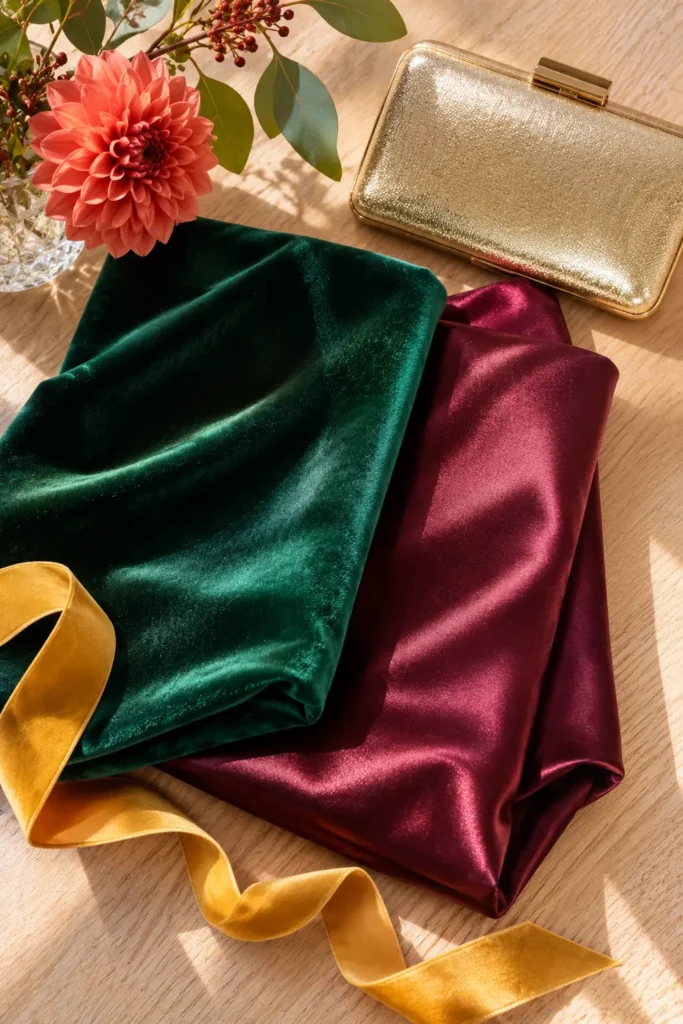
Fabric decides how comfortable you feel at 10 p.m. more than the cut does. Light, breathable fabrics keep you cool at spring and summer weddings. Heavier fabrics and deeper colors keep you warm and look right at fall and winter weddings.
Spring and Summer Weddings
Chiffon, linen, cotton and lightweight crepe let air move, so you stay cooler through an outdoor ceremony. Polyester satin looks dressy but traps heat, which is why it suits air-conditioned evening venues better than a sunny lawn. Soft blue, sage, lilac and floral prints feel right in daylight. Linen wrinkles fast, which looks relaxed at a beach wedding and messy at a formal one.
Fall and Winter Weddings
Velvet, satin, wool crepe and lace with a lining hold warmth and catch evening light. Jewel tones such as emerald, sapphire and burgundy look rich next to candlelight, and navy is a softer alternative to black. Black is fine at most weddings today, especially in the evening. Add a texture like velvet or a metallic clutch so the look feels festive. Long sleeves or a velvet jacket cover the cold walk from the car to the door.
Shoes You Can Stand, Sit and Dance In
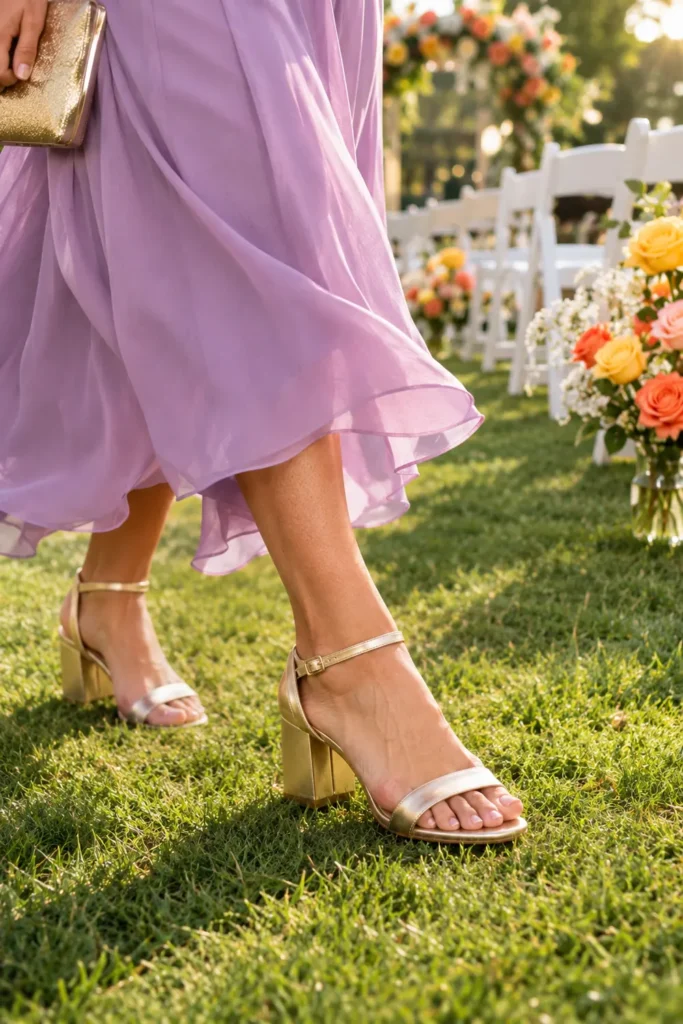
Picture the day: photos on the church steps, a walk across the lawn, cocktail hour on your feet, then dancing after dinner. The right wedding shoe handles all of it. A block heel, a wedge or a dressy flat gets you from the ceremony to the last song without wincing.
A block heel has a thick, squared heel that spreads your weight, so it feels steadier than a stiletto on old floors and cobblestones. A wedge has a solid sole from heel to toe, so it won’t sink into grass or sand, which makes it a strong pick for garden and beach weddings. Dressy flats in satin, metallic leather or with a jeweled toe look formal enough for black tie.
If you wear orthotics, look for dressy shoes with a removable insole. A low block-heel pump or a velvet loafer can hold an insert and still look right with a gown or pantsuit.
Wear new shoes around the house for a few evenings before the wedding, so they soften where they rub. A pair of folding flats in your bag is cheap insurance for the dance floor.
Wearing thin heels to a lawn ceremony? Clear heel protectors slip over the tip and widen it, so your heel stays on top of the grass instead of sinking in. Check the size against your heel before the day. They can slip off in wet, muddy ground, so if rain is in the forecast, choose a block heel or wedge instead.
Layers and Finishing Touches
Bring one light layer and keep accessories in step with the dress code. A wrap or jacket covers you in a chilly church or an air-conditioned reception hall. A small bag and one standout piece of jewelry finish the outfit without crowding it.
A shawl or pashmina folds into a clutch and covers bare shoulders in a house of worship. A cropped jacket or bolero ends at the waist, so it keeps the shape of your dress visible. For winter weddings, a long wool coat in a dark solid goes over a gown without fighting it.
Choose a clutch big enough for your phone, lipstick and reading glasses. Pick one focal point, either statement earrings or a necklace, so the look stays clean. A navy, black or metallic jacket can go to many weddings, and it’s a smart piece to add if you’re building a capsule wardrobe after 50.
Wedding Guest Attire Etiquette: What to Skip
Only a few wedding etiquette rules still hold firm. Skip white and anything close to it, and don’t outshine the couple. Follow the venue’s rules on coverage, and leave everyday casual clothes at home unless the invitation asks for them.
White, ivory, cream and pale champagne belong to the bride. That includes a print on a white background and a very pale blush that turns white in photos.
Outshining the couple usually comes from a mismatch with the dress code, not from looking great. A full sequin gown at a daytime garden wedding pulls eyes away from the couple. The same gown at an evening black tie wedding fits right in.
Read the wedding website for special requests. Some couples ask guests to avoid the bridal party’s colors, and others ask for an all-black or a bright, colorful crowd.
In a house of worship, covered shoulders or a head covering may be expected. If you’re unsure, bring a wrap and ask a family member. Denim, sneakers and athletic wear stay home unless the couple asks for them.
Frequently Asked Questions
Can I wear black to a wedding?
Yes. Black is acceptable at most weddings today, especially evening and formal ones. For a daytime or casual wedding, add color with a wrap, shoes or jewelry so the outfit feels festive.
Is it okay to wear pants or a jumpsuit to a wedding?
Yes. A dressy pantsuit or jumpsuit in crepe, satin or velvet is correct at every dress code up to black tie optional. A good fit at the waist is what makes pants look polished, and our guide to choosing high-waist or mid-rise pants helps you find a rise that stays comfortable through dinner.
Do I need to cover my arms at a wedding?
No, unless the venue’s religious customs call for covered shoulders. Sleeves are your choice. A light wrap covers you in a strict church or a cold reception hall.
How long should a wedding guest dress be after 50?
Choose the length that matches the dress code and lets you sit comfortably. Midi length works at the most dress codes. Floor length suits black tie and formal weddings, and knee length fits cocktail and daytime weddings.
Can I wear a floral print to an evening wedding?
Yes, if the flowers sit on a dark background and the fabric is dressy, such as satin, chiffon or velvet. Skip florals printed on a white or cream base, because they can read as bridal in photos.
Final Thoughts
Now you know what to wear to a wedding over 50. Read the invitation, match the dress code, then choose a shape, fabric and shoes you can enjoy all day long. The right level of dressiness matters far more than any rule about age. Your next step is the sit-down test in a fitting room, well before the date sneaks up. Save this pin so it’s ready the next time an invitation lands in your mailbox