
If you’re searching for how to dress to hide belly over 50, you probably have a closet full of clothes that fit fine three years ago. The pants still zip, but they dig in. The knit tops that used to skim now cling. I spent a whole spring buying bigger sizes before I figured out the problem was the cut, not the size.
Nothing is wrong with you. After menopause, the body tends to store more weight around the midsection than on the hips and thighs, even when the scale barely moves. Your shape changed, so the clothes that suit it changed too.
The answer is not a tent. The outfits that work best do three things:
- They skim over the belly without gripping it.
- They mark your narrowest point, so your shape still shows.
- They build long vertical lines that carry the eye up and down.
This guide covers:
- where your real waist sits now
- where tops should end
- which fabrics and pants to look for
- how color and layers help
- the dress shapes that work with a menopause belly
- a quick fit check to use in any fitting room
How to Dress to Hide Belly Over 50 Without Losing Your Shape
Dressing a fuller midsection over 50 comes down to fit, not size. Choose pieces that skim the belly without clinging, define the narrowest part of your torso, and create long vertical lines. Those three moves keep your shape visible. The belly becomes one smooth part of the outfit instead of the thing people notice first.
Why the Midsection Changes After 50
Menopause belly is the name many women use for weight that settles around the stomach during and after menopause. Menopause usually arrives in the late 40s or early 50s. As estrogen drops, the body becomes more likely to store fat at the abdomen than at the hips and thighs.
Weight also tends to creep up by about 1.5 pounds a year through the 50s. Muscle loss and a slower metabolism are part of the reason. So a woman can wear the same size and still find her waistband sits differently. That’s a change in shape, and clothes can work with shape.
Skim, Define, Lengthen
Every trick in this guide does one of three jobs:
- Skim: fabric falls over the belly and doesn’t grip it, so no line pulls across the stomach.
- Define: something marks your narrowest point, like a seam under the bust or a soft belt, so your outline keeps a waist.
- Lengthen: long lines carry the eye up and down instead of side to side. Think of an open cardigan, one color head to toe, or a V-neck.
When an outfit feels off, check which job is missing. A top that skims but defines nothing looks shapeless. A top that defines but doesn’t skim feels tight by lunchtime.
Find Your Real Waist First
Your waist may have moved. For many women over 50, the narrowest point of the torso is no longer at the belly button. It sits right under the bust or a few inches above the old waistline. Dressing that new spot is how you keep your shape.
When Your Narrowest Point Sits Under the Bust
Put on a fitted tank top and stand sideways at a mirror. Look for the place where your body curves in the most. If that spot is right below your bust, look first at empire-waist pieces.
An empire waist is a seam that sits right under the bust, with fabric falling loosely from there. The seam shows off your narrowest point. The loose fabric below passes over the belly without gripping it.
You’ll find empire waists on blouses, knit tops and dresses. Apple-shaped women, who carry more weight through the middle and often have slimmer legs, tend to see results here fastest.
Belts That Define Without Squeezing
A belt still has a place in your closet over 50. Where you put it matters more than the belt itself. Wear a soft belt about 1 to 2 inches wide at your narrowest point, over a tunic, a shirt dress or an open cardigan.
Skip thin belts buckled across the fullest part of the belly. They draw a hard line right across the middle. Stretch belts with a soft, elastic band move with you when you sit, which helps on bloated days.
Where Your Tops Should End
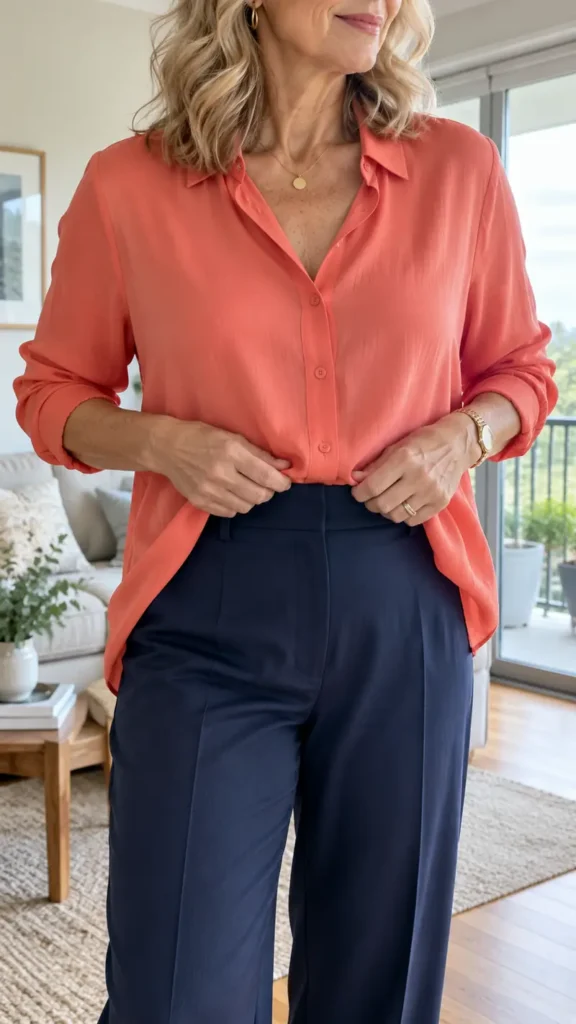
A top that ends 2 inches too high can throw off a whole outfit. The hem of your top decides where the eye lands. Untucked tops should end a little past the fullest point of your tummy, usually near the hip bone. Tucked tops work best with a loose, partial tuck that lets fabric fold softly over the waistband.
Untucked Tops: A Little Past the Fullest Point
Find the fullest point of your belly from the side. Your top should end a little below that point, usually around the hip bone, so the fabric falls straight down.
Watch for two mistakes:
- A hem that stops right at the fullest point. It draws a horizontal line across the widest spot.
- A hem that curves under the belly. Stretchy cropped tees often do this, and it cups the belly so it looks rounder.
Tunic-length tops that end mid-hip pair well with slim pants or leggings. The narrow leg balances the extra fabric on top.
Tucked Tops: The Soft Front Tuck
A full tuck pulls fabric tight across the stomach, which is why so many women give up on tucking. A front tuck works differently. A front tuck, also called a French tuck, puts only the center of the hem into your waistband and leaves the sides and back loose.
The tucked part shows where your pants sit. The loose fabric drapes over the belly.
Use a fluid top, like a viscose blouse or a fine-knit sweater, with high-rise pants. Stiff cotton shirts and chunky sweaters bunch at the waistband and add bulk.
After you tuck, raise both arms straight over your head, then lower them slowly. The top lifts about an inch out of the waistband and settles into a soft, even blouse. That small bit of slack is what lets the fabric drape over your tummy instead of pulling flat across it.
Fabrics That Skim Instead of Cling
You pull on a stretchy tee that fit last summer, and now it shows every curve. The fix is fabric weight: choose mid-weight, fluid fabrics that hang away from the body and move when you move.
Fabric drape is how a fabric hangs and falls. Good drape lets cloth slide over the belly instead of gripping it. These fabrics drape well:
- Viscose (often labeled rayon in the US) for blouses and dresses
- Matte jersey for knit tops and wrap dresses
- Soft crepe for dressier tops and skirts
- Ponte knit for pull-on pants and shift dresses that need a little structure
Two kinds of fabric work against you. Thin, shiny stretch fabric clings and reflects light, so it highlights every curve. Very stiff fabric, like heavy poplin, stands out from the body and tents over the stomach.
Ruching and draping help too. Ruching is fabric gathered along a seam, and the soft folds blur the line underneath.
In the store, drape the fabric over your hand. If it falls in soft folds, it will skim. If it sticks to your skin or holds a stiff shape, put it back.
The Best Pants for a Belly Over 50
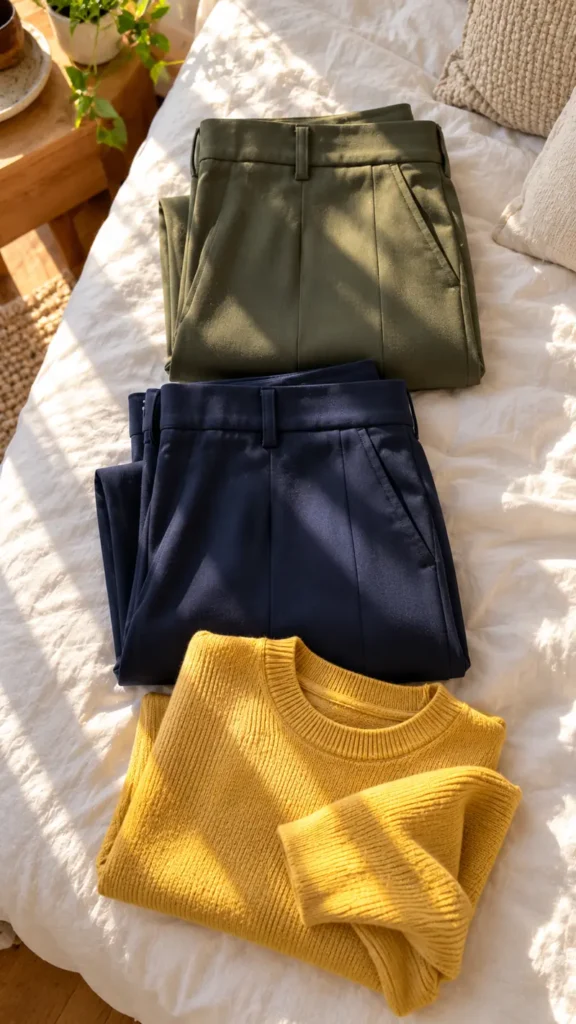
The best pants for a belly over 50 are high-rise, flat-front pants with a smooth waistband and a wide or straight leg. High-rise pants sit at or just above your belly button, so the waistband holds the belly instead of cutting under it. Mid-rise pants often land right at the fullest point, which pushes the belly up and over the waistband.
Waistbands That Don’t Dig In
A tight, rigid waistband creates a “double tummy,” a soft roll above the band. Comfort and shape both depend on the waistband, so look for one of these:
- A wide, flat waistband with hidden elastic at the back
- Pull-on ponte pants with a smooth front and no fly
- Stretch denim (check the label for elastane) instead of rigid 100% cotton
- A side or back zip, so there’s no fly bulk at the front
Some jeans and trousers also come with a built-in tummy panel. It’s a light inner layer that smooths without squeezing.
If you’re unsure which rise suits you, our guide to choosing high waist vs mid rise pants walks through both.
Leg Shapes That Balance a Fuller Middle
Wide-leg and straight-leg pants give the lower half some width, so the top and bottom of your outfit look balanced. A slight bootcut does the same.
Skinny pants can still work under a longer tunic, because the long top evens out the narrow leg.
Skip front pleats and big front patch pockets. Both puff fabric out right over the belly.
For length, aim for a full-length leg or one that grazes the ankle bone with a little shoe showing. That line makes your legs look longer.
Build Long Vertical Lines With Color and Layers
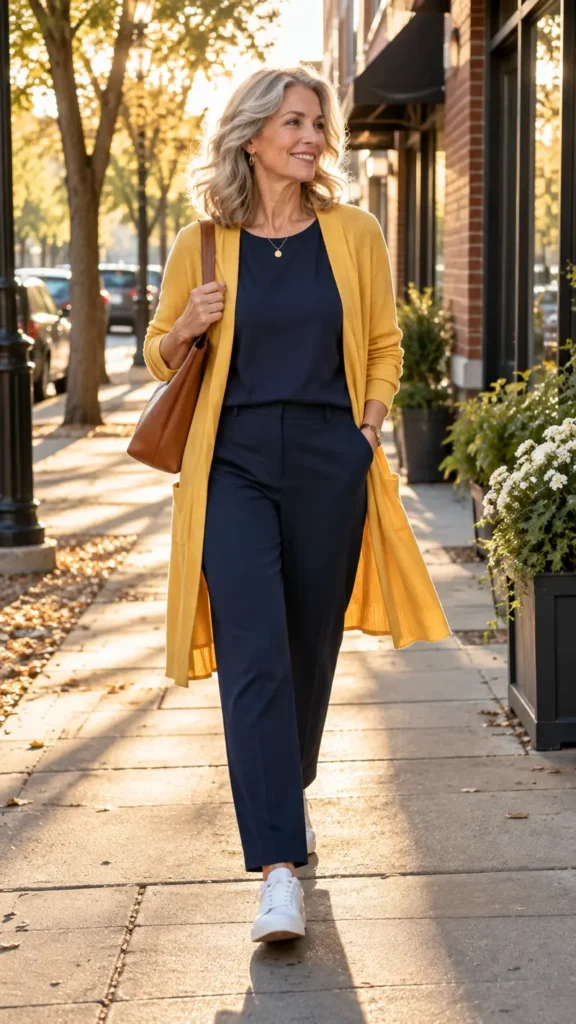
If an outfit looks choppy, count the lines that cross your middle. Every color change at the waist is a horizontal line, and the eye stops there. Vertical lines keep the eye moving from shoulders to shoes. You can build them in two ways: with one color, or with a long open layer.
The Column of Color
A column of color means wearing your top and bottom in the same color, or two close shades. With no break at the waist, your whole frame reads as one long line.
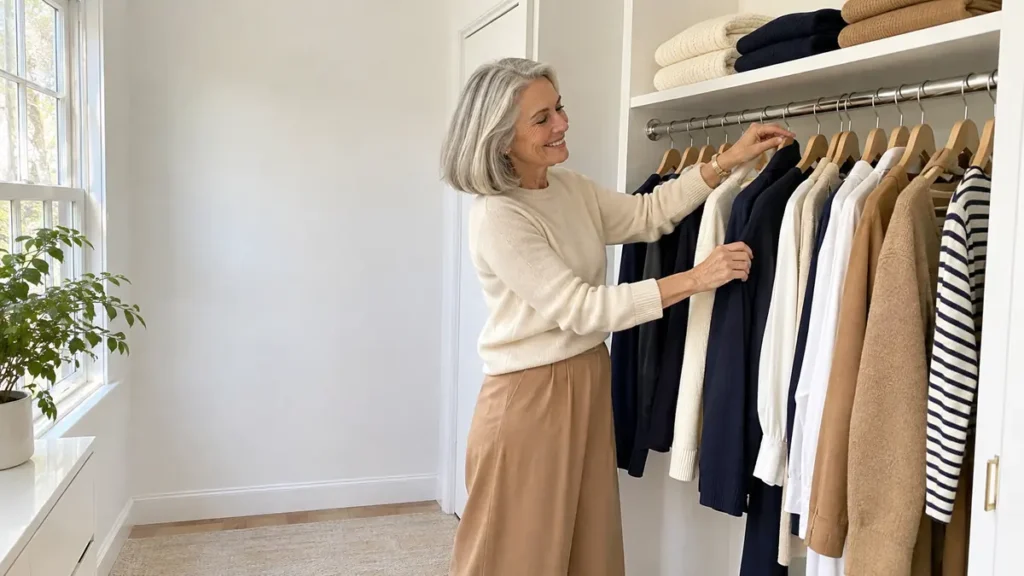
It doesn’t have to be black. Mid-value shades work well because they don’t contrast as sharply with your skin. Try camel, olive, navy, soft gray or dusty rose.
The column works on weekends too. Matching knit joggers and a top in one oatmeal shade look put-together under a long cardigan. Our guide to styling joggers after 50 has more casual ideas.
The Third Piece
A third piece is an open layer worn over your top and pants, such as a longline cardigan, a duster, an unbuttoned blazer or a long vest. Worn open, it makes two vertical lines down the front of your body, and it covers the sides of your midsection.
Aim for a hem at mid-thigh or longer.
The frumpy look comes from layering soft and bulky pieces together, like a chunky cardigan over a loose tunic. Give one layer some structure. A blazer or cardigan with a shoulder seam that sits on your shoulder bone keeps the whole outfit looking sharp.
A third piece also comes off fast when a hot flash hits.
Dresses That Work With a Menopause Belly
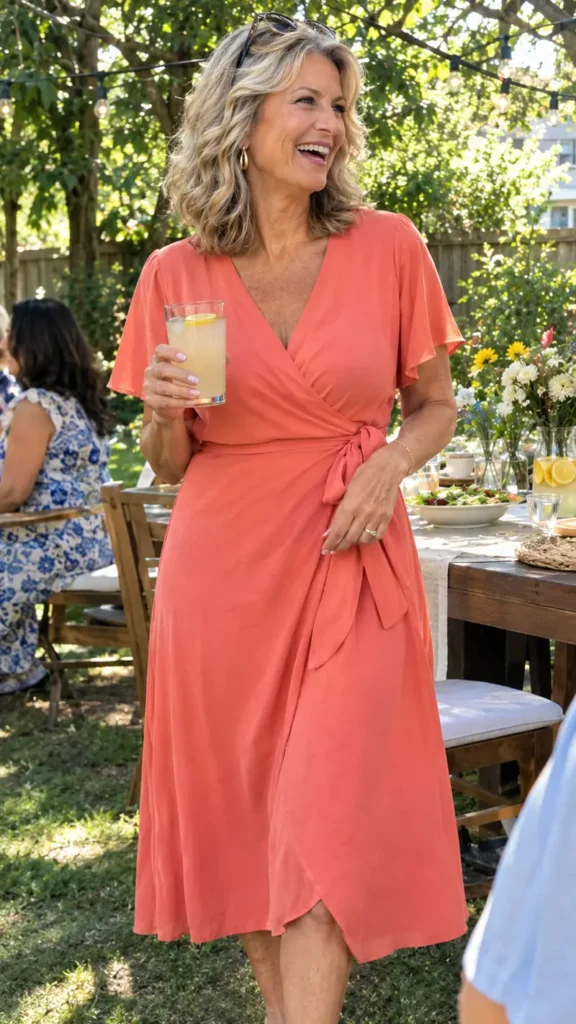
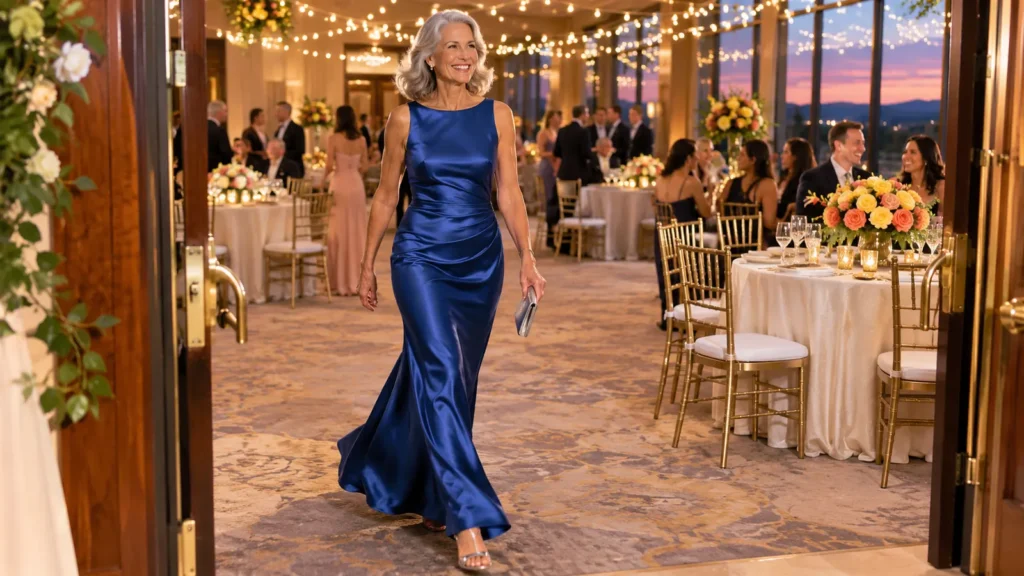
Many women give up on dresses once the waist changes. The shape of the dress matters more than the size. Empire waist, wrap, A-line, shift and shirt dresses work best with a menopause belly, because each one either marks your narrowest point or falls straight past the belly without gripping it.
Empire Waist and Wrap Dresses
An empire waist dress has its seam right under the bust. The skirt flows loosely from there, so your shape shows at the top and the belly gets room below. Choose viscose or soft crepe so the skirt hangs in soft folds.
A wrap dress crosses one side over the other and ties at the waist. That creates a V-neck and a diagonal line across the body, and the folds of fabric blur the midsection.
Some women find a wrap pulls attention to the belly. That happens when the tie sits right at the fullest point. Look for a faux wrap in matte jersey with the tie set higher, at your narrowest point. If the tie still lands on your belly, an empire waist will suit you better.
A-Line, Shift and Shirt Dresses
An A-line dress fits through the shoulders and bust, then widens gradually toward the hem, like the letter A. The skirt moves away from the belly instead of hugging it.
A shift dress is a straight, unfitted dress that falls from the shoulders. In ponte or crepe, a shift skims the whole torso. Add a long necklace or an open layer so the outfit doesn’t look boxy.
A shirt dress gives you a vertical line of buttons down the front. Belt it loosely at your narrowest point, or wear it unbuttoned over a slim top and pants as a long layer.
For length, a midi or knee-length hem keeps the proportions balanced.
If you’re still deciding whether dresses belong in your week at all, start with the dresses vs pants question.
| Factor | Empire Waist | Wrap | A-Line | Shift |
|---|---|---|---|---|
| Where it shapes you | Right under the bust | At the tie, with a diagonal line | Through the shoulders and bust | Doesn’t define; skims straight down |
| How it treats the belly | Flows loosely over it | Folds of fabric blur it | Widens away from it | Falls straight past it |
| Best fabric | Viscose, soft crepe | Matte jersey | Crepe, light cotton blends | Ponte, crepe |
| Adjustable fit | Low | High (loosen the tie) | Low | Low |
| Watch out for | A seam that sits on the bust, not under it | A tie at the fullest point of the belly | Too much volume in thick fabric | A boxy cut with no layer or accessory |
| Best occasions | Summer days, evenings out | Work, dinners, weddings | Everyday, church, garden parties | Office, travel, layering |
| Best for | A narrow spot under the bust | A defined waist above the belly | A fuller middle with slimmer hips | Little waist definition (apple shape) |
Draw the Eye Up With Necklines and Accessories
A V-neck or scoop neck pulls attention up toward your face and makes the torso look longer. An open collar on a shirt does the same.
Accessories can carry that line further down:
- A long pendant necklace that ends a few inches below the bust adds a vertical line down the center of the body.
- A lightweight scarf worn loose, with both ends hanging long, makes two vertical lines.
Your bra matters more than most women expect. A supportive bra that fits well lifts the bust and creates space between bust and waist, so your torso looks defined again.
Shapewear is optional. If you like a smoother line under knit dresses, choose a light-control piece you can sit in all day, not one that squeezes.
A Quick Fit Check Before You Buy
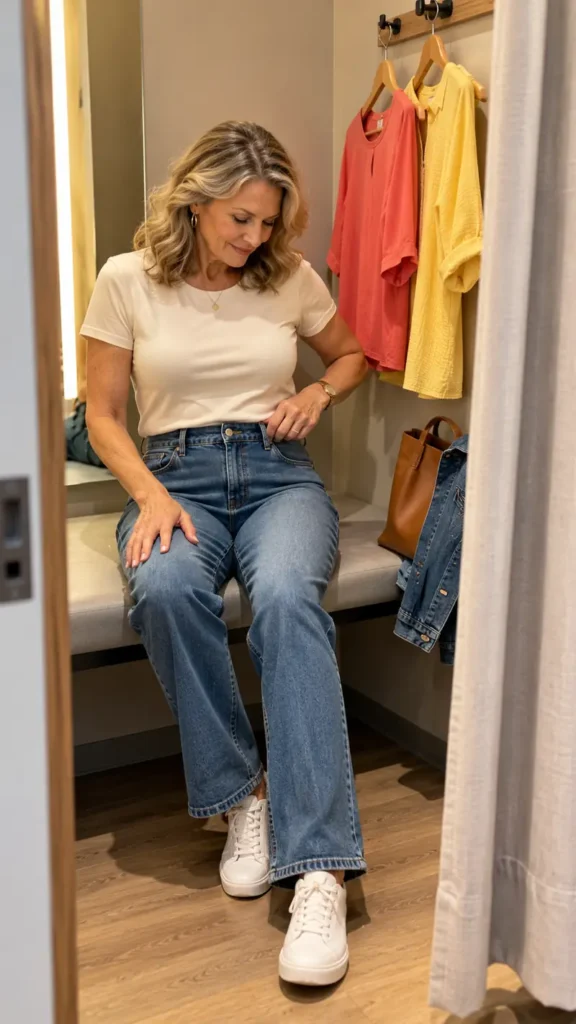
Three tests in the fitting room tell you more than the size tag:
- Sit down. The waistband shouldn’t dig in, roll over, or pull the buttons tight.
- Turn sideways. The top’s hem shouldn’t cup under your belly, and the fabric shouldn’t cling.
- Reach both arms forward. Your top should stay below the waistband, not ride up.
Try pants on in the afternoon if you can. Many women’s bellies are fuller later in the day, and pants that pass the tests then will feel good from morning to night.
You don’t need to replace your whole closet at once. Start with two or three pieces that pass all three tests. Then decide whether a capsule wardrobe or full closet suits the way you live.
Buy pants that fit your hips and seat, then have a tailor take in the waist. Taking in a waist is a quick, low-cost alteration. Letting out the hips is often impossible, because most pants have very little spare fabric in those seams.
Frequently Asked Questions
What kind of pants are best for a belly over 50?
High-rise, flat-front pants with a wide, smooth waistband work best, because they sit above the belly instead of cutting under it. Look for a side or back zip, a little stretch, and a wide or straight leg to balance a fuller middle.
Should you tuck in your shirt if you have a belly?
A full, tight tuck usually pulls fabric flat across the stomach. A soft front tuck is the better choice. Tuck only the center of a fluid top into high-rise pants, and let the fabric blouse loosely over the waistband.
Do wrap dresses work for a menopause belly?
Wrap dresses are some of the most tummy-flattering dresses over 50, as long as the tie sits at your narrowest point and not on the fullest part of the belly. Choose a faux wrap in matte jersey so the folds drape softly instead of pulling.
What colors make the midsection look smaller?
No single color does the job alone. A column of color does, because one shade from top to bottom removes the line across your middle. Mid-value colors like navy, olive and camel work as well as black and often look softer against your skin.
How do you dress with a belly over 50 and still show your shape?
Mark your narrowest point, which is often right under the bust, with an empire seam, a soft belt or a tie. Let fabric skim over the belly below it. Defining one spot and skimming the next keeps your outline visible without drawing attention to your middle.
Do you need shapewear to hide a belly?
No. The right fabric, rise and hem placement do most of the work. If you like a smoother line under knit dresses, pick a light-control piece you can sit in comfortably all day.
Dressing the Body You Have Now
Your shape changed, and your clothes can change with it. You now know how to dress to hide belly over 50 without hiding yourself: skim the belly, mark your real waist, and build long lines from shoulders to shoes.
Start with one piece this week, like a pair of high-rise, flat-front pants or a top that ends a little past your fullest point. Take it through the sit-down test, and notice how different it feels.
Save this pin for your next fitting room trip, so the rules are on your phone when you need them.