
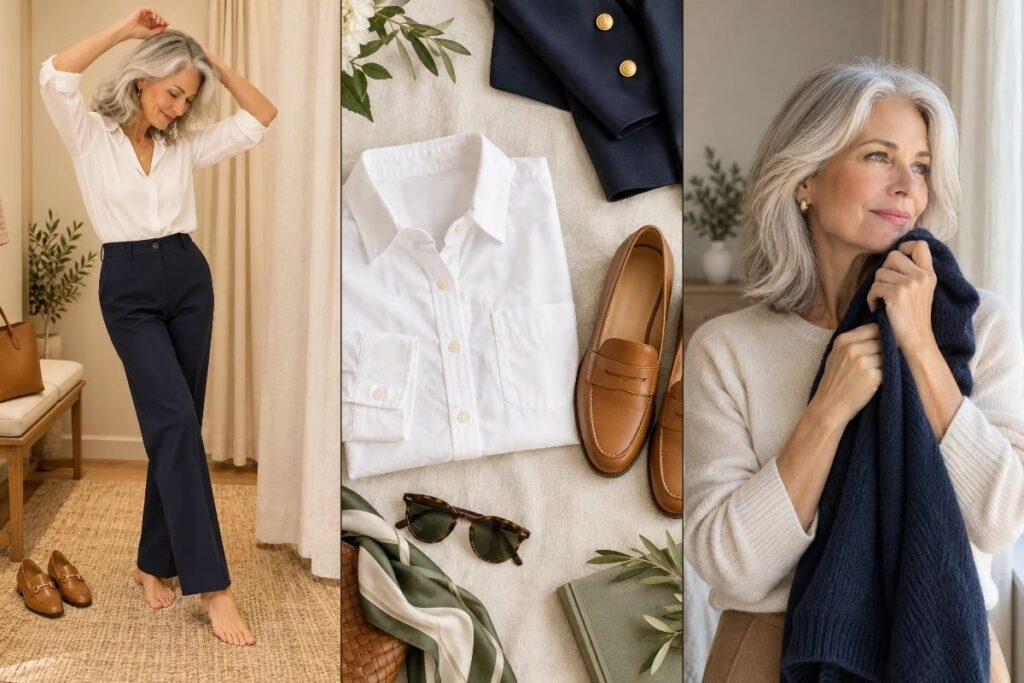
You open your closet, look at a rail packed with clothes, and still feel like you have nothing to wear. Some of it was bought for a life you don’t live anymore. A few pieces still have the tags on. Building a timeless wardrobe after 50 fixes that, and it starts with what you already own, not with a shopping trip.
By the end of this guide, you will know the 10 classic pieces that do most of the work in your closet. You’ll know which ones you’re missing. You’ll also have a set of quick checks that tell you, right there in the store, if a trend is worth your money. You won’t throw everything out, and you won’t follow a list of rules from a magazine.
This method works because it starts with proof. The clothes you wear most often already show what fits you, what feels good, and what suits the person you are now. We build from there.
Plan on 2 to 3 hours for the closet part. Wear something comfortable, clear off your bed, and grab a notebook. The shopping steps come later, and they get faster every time you use them.
What Changes
Your Closet Before and After This Guide
Before
- A full closet, but you wear the same 5 things on repeat
- Sale buys with the tags still on
- Trend pieces that felt wrong by the second wear
- 20 minutes to pick an outfit, then changing twice
After
- 10 anchor pieces that all mix with each other
- A short gap list, so you shop with a plan
- A clear trend rule: 1 in every 5 new pieces
- Outfits ready in under 5 minutes
Pull your 10 most-worn pieces out onto the bed
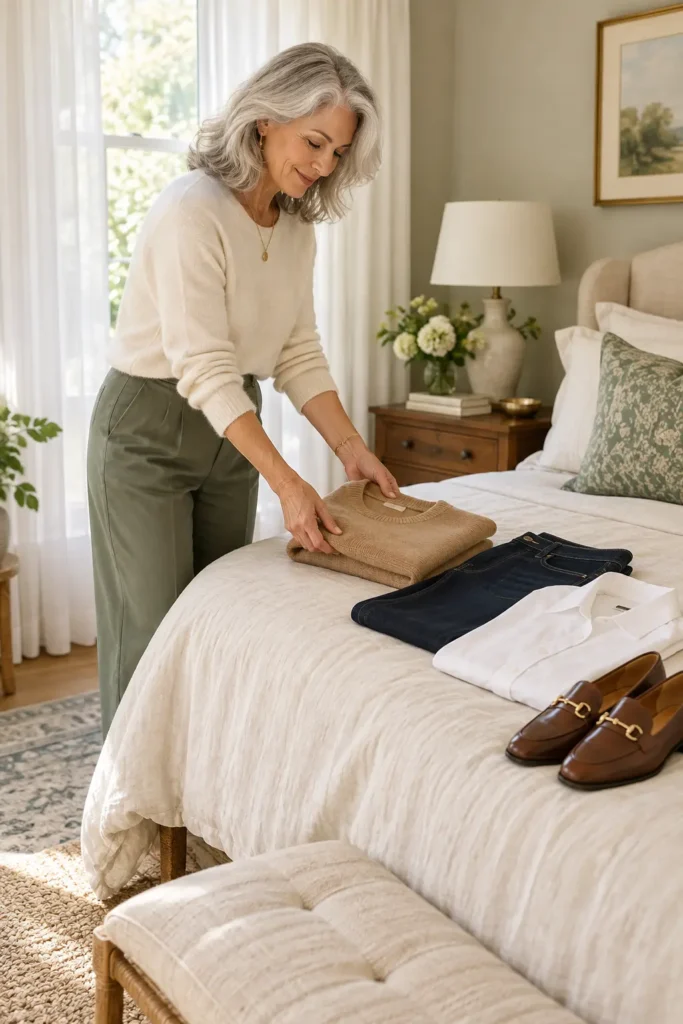
Your memory is better than you think here. Picture the last 30 days. Which tops, pants, jackets, and shoes did you reach for again and again? Lay each one flat on the bed where you can see it. Shoes count. Underwear, pajamas, and workout gear do not. If you can only find 6 or 7 pieces, stop there. A short pile tells you something too: most of your closet isn’t working for you right now.
Write down what those 10 pieces have in common
Three things to look for, one line each in your notebook:
- Fit: loose, fitted, cropped, or long?
- Fabric: cotton, soft knit, denim, linen, silk?
- Color: which shades show up more than once?
This short list is your real style, not the one you think you should have. Every piece you buy from now on gets checked against it.
Also Read: How to Choose High Waist vs Mid Rise Pants Over 50 That Fit Your Body
Sort everything else into Keep, Fix, and Let Go piles
Stick three sticky notes on the floor and label them Keep, Fix, and Let Go. Hold each piece and ask one question: have I worn this in the past 12 months? Yes goes to Keep. No goes to Let Go. The exception is anything you’d wear today if it weren’t for a loose button, a fallen hem, or a small tear. That goes to Fix. Count a winter coat or swimsuit as worn if you used it last season. Work fast. If you spend more than 10 seconds on one item, you’re usually talking yourself into keeping it.
⚠ Heads Up
Before anything lands in Let Go, ask if a tailor could save it. Taking in a waist or shortening a hem often costs $15 to $25. That is far less than replacing a good wool coat or a pair of well-made trousers.
Pick three neutral colors that flatter your skin and hair today

If your hair has gone silver or lighter, the black you wore at 35 may now look harsh near your face. Your skin tone has likely shifted too. Choose one color from each group:
- Dark base: navy, charcoal, chocolate brown, or black
- Light: ivory, cream, or soft white
- Middle: camel, taupe, olive, or gray
Three neutrals means almost every piece you own will match almost every other piece. That cuts your getting-dressed time to minutes.
✦ Pro Tip
Test colors by a window in the morning, not under bathroom bulbs. Hold each piece right under your chin for 5 seconds. The shade that makes your skin look rested is your keeper. The one that shows every shadow under your eyes is not.
Also Read: How to Settle the Dresses vs Pants Over 50 Question for Your Own Closet
Build your timeless wardrobe after 50 on a list of 10 anchor pieces
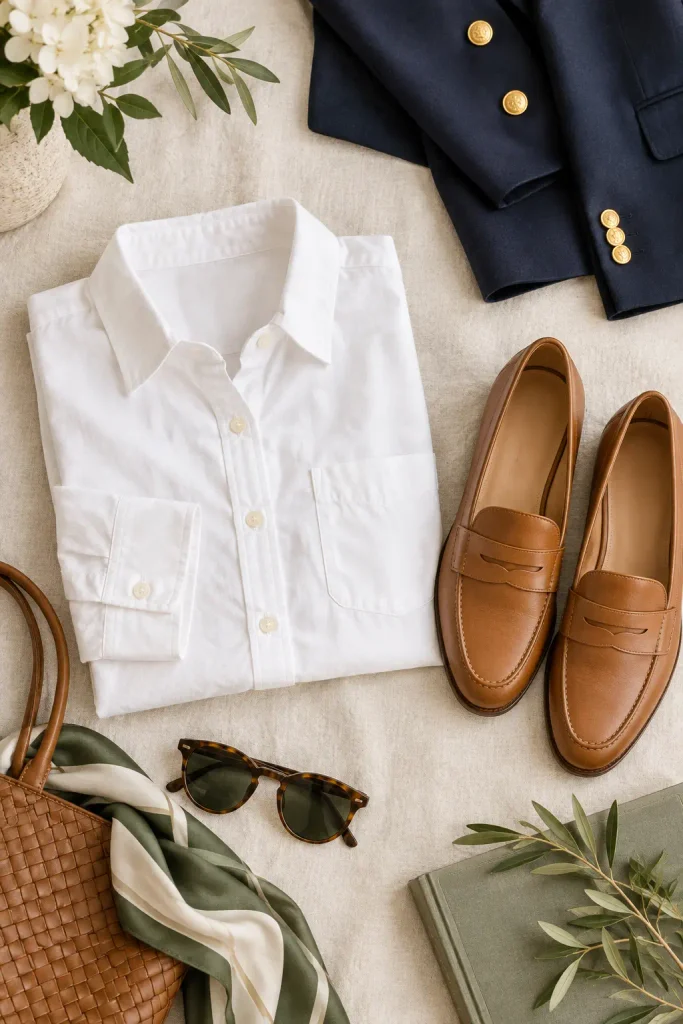
Anchors are the plain, well-made pieces every outfit leans on. They rarely go out of style, so they are where your money does the most good. A strong starting list:
- Tops: a crisp white shirt and a fine-knit crewneck sweater
- Bottoms: dark straight-leg jeans and tailored trousers
- Layers: an unlined blazer and a trench or wool coat
- Shoes: leather loafers or ankle boots, plus clean white sneakers
- Extras: a structured leather bag and a long silk or wool scarf
Swap anything that doesn’t fit your life. If you never wear trousers, write in a midi skirt. Every anchor should come in one of your three neutrals.
Mark the gaps between your anchor list and your closet
Two columns on one page is all this takes. On the left, write every anchor you already own that sits in your Keep pile and fits you today. On the right, write the ones you don’t have, plus any that are pilled, stretched, or faded. (A notes app on your phone works fine.) Then circle the 2 gaps you would wear most this season. Those two are your shopping list. Nothing else.
Run the cost-per-wear math before you buy anything over $75
Price divided by wears. That is the whole formula. The hard part is being honest about the number of wears. Count how often you’d reach for it each week, multiply by the weeks in its season, then by the years it will hold up. Under $2 per wear is a strong buy. Over $10 per wear usually isn’t, unless it’s for an event you can’t skip, like a wedding.
✦ Pro Tip
Here is the math side by side:
A $200 wool coat worn 50 times a winter for 4 winters = $1 per wear.
A $60 trend top worn 4 times = $15 per wear. The “cheap” one costs you fifteen times more.
Check the fabric tag and the seams before you try anything on
Thirty seconds at the rack can save you a return trip. Turn the piece inside out and look for four things:
- Fiber content: at least 50% cotton, wool, linen, or silk for anchors
- Seams: tug gently. Stitches shouldn’t gap or show light through.
- Patterns: stripes and plaids should line up at the side seams
- Weight: hold a white shirt up to the light. If you can see your hand clearly, it will look sheer on you.
Anchors need to last for years. Thin fabric pills, twists, and loses its shape after a handful of washes.
Test the fit by sitting, reaching, and raising both arms
Fitting room mirrors only show you standing still, and real life doesn’t happen that way. Sit on the bench for 10 seconds. Waistbands shouldn’t dig in, and shirt buttons shouldn’t pull open. Reach both arms forward like you’re holding a steering wheel. A blazer shouldn’t feel tight across your back. Raise both arms over your head. Your shirt shouldn’t come untucked or ride up more than 2 inches. No bench? Squat down halfway instead.
⚠ Heads Up
Size labels change between brands, and even within one brand over the years. A size 10 in one store can fit like a 6 in another. Bring 2 sizes into the fitting room every time, and buy the one that passes the tests, whatever number is on the tag.
Keep trend buys to one in every five new pieces
What counts as a trend? Anything you see everywhere this season that you wouldn’t have worn 3 years ago: a new color, a sleeve shape, a bold print. For every 4 classic pieces you add, allow yourself 1 of these. That keeps your closet about 80% classic and 20% playful. You get to have fun with fashion without rebuilding your closet every year.
Try trends in shoes, bags, scarves, and jewelry first

$30 to $60 is the right range for a first trend buy. Small pieces don’t change your shape or sit right against your face, so a wrong guess costs less. They also work with the anchors you already own. Good places to start:
- A scarf in this season’s color
- A bag in a new shape or texture
- Statement earrings
- Flats or loafers in a trending print or finish
If you still love it after a full season, try that trend in a bigger piece next year.
✦ Pro Tip
One trend accessory can refresh 3 or more outfits you already have. A deep red bag, for example, looks new with dark jeans and a white shirt, with camel trousers, and with a navy sweater. You get three outfits that feel current for the price of one bag.
Wait 48 hours before you buy any trend piece
Trend shopping runs on excitement, and excitement fades fast. Take a photo of the item and its price tag, then walk out of the store or close the browser tab. Set a phone reminder for 48 hours later. When it goes off, ask yourself two things. Am I still thinking about it? Does it pass the cost-per-wear math from Step 7? Two yeses mean go buy it. If you forgot about it, you kept that money in your pocket.
Style each new piece three ways before you cut the tags
Tags are your safety net. Once they’re off, most stores won’t take a piece back. At home, use clothes you already own to put together 3 full outfits around the new piece:
- One for a regular weekday
- One for dinner out or an event
- One for a relaxed weekend
Snap a mirror photo of each. If you can’t make all three, return it before the window on your receipt closes. If you can, cut the tags and save those photos. They’re your first outfit ideas for busy mornings.
Troubleshooting
When Things Don’t Go to Plan
FAQ
Your Questions, Answered
Can I still wear jeans after 50?
Yes. A dark wash in a straight or wide leg with a mid or high rise works for almost everyone. The waist should sit flat without gaping at the back.
Is black too harsh after 50?
Not for everyone. Try the window test from Step 4. If black looks harsh near your face, keep it for pants and shoes, and wear navy or charcoal on top.
How can I tell a passing fad from a trend that will last?
Trends that last usually update a classic, like a new color for a trench coat or a wider leg on trousers. Fads tend to look like a costume when you picture wearing them in 3 years.
How many pieces do I need in total?
There is no magic number. Your 10 anchors plus 10 to 20 supporting pieces in your three neutrals will cover most weeks.
How often should I redo the closet check?
Twice a year, when you switch your summer and winter clothes. Once your anchors are in place, it takes about 1 hour.
What do I do with my Let Go pile?
Sell pieces in good shape through consignment or resale apps. Donate the rest, and take worn-out items to a textile recycling bin.
Conclusion
Your closet has a plan behind it now.
You know your anchors, your colors, and your gaps, and you have a test for every trend that catches your eye. That’s what a timeless wardrobe after 50 looks like: fewer pieces and more outfits.
Your next step is to take your gap list on your next shopping trip and buy only the first item you circled.
Pin this guide to your style board so the cheat sheet is in your pocket the next time you shop.