
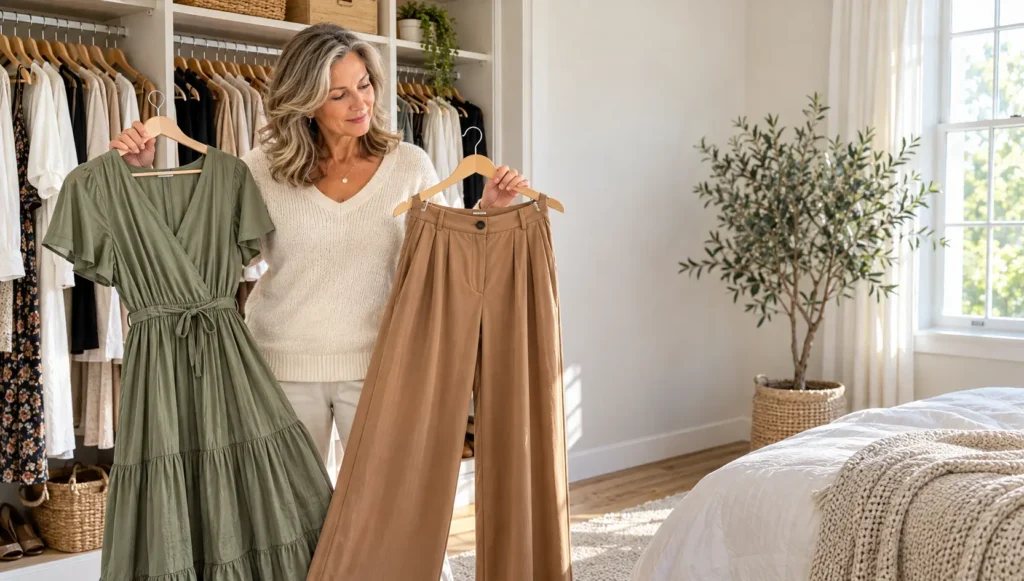
Ask ten style guides whether women should wear more dresses or more pants after 50, and you’ll get ten confident answers that cancel each other out. One says dresses are kinder to a changing waistline. The next says tailored trousers look sharper and hide less-loved knees. The truth about dresses vs pants over 50 is that neither side wins for everyone. Your answer is already sitting in your closet, mixed in with the clothes you skip.
This guide helps you find it. Over the next two weeks, you’ll track what you really wear, test both options on the same kind of day, and score how each one feels. By the end, you’ll have your own ratio, maybe 60% pants and 40% dresses, built around your body, your schedule, and your weather.
It works because your own life is the evidence, not a magazine’s. The setup takes about 30 minutes. The testing happens while you get dressed anyway, so it costs you no extra time. Grab a notebook or the notes app on your phone, and let’s start with this week.
What Changes in Two Weeks
Before
- Dresses hang unworn “for a nice day”
- The same 3 pairs of pants on repeat
- You change outfits halfway through the day
- Shopping is guesswork
After
- A clear dress-to-pants ratio that fits your week
- You know which fabrics and lengths work for you
- Fewer outfit swaps before noon
- One shopping list with a reason behind every item
Track what you wear for one ordinary week
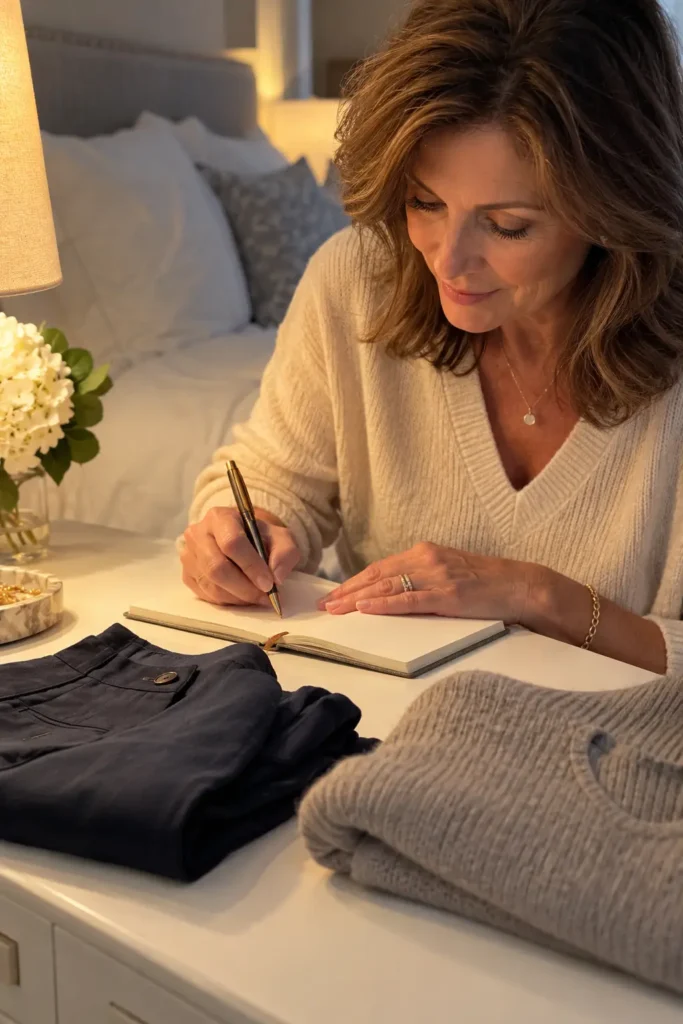
Seven days is enough to see a pattern. Each night, write down the main piece you wore, where you went, and whether you changed out of it early. That last note matters most. A dress you swapped for leggings by 2 p.m. is telling you something. Pick a week with no holidays or trips, because those throw off the count.
List every place your week takes you
Your clothes have to work where you actually go, not where you wish you went. Open your notes from the first week and write each place on its own line: the office, the grocery store, school pickup, the garden, a friend’s kitchen table.
Next to each one, add roughly how long you stay there and whether you mostly sit, stand, or walk. A 20-minute grocery run in a wrap dress is fine. Two hours of kneeling in the garden in that same dress is a different story. You’re looking for a mismatch between what you own and what your days ask for.
Also Read: How to Style Joggers After 50 So Every Outfit Looks Deliberate
Pull your five most-worn pieces and note why you reach for them
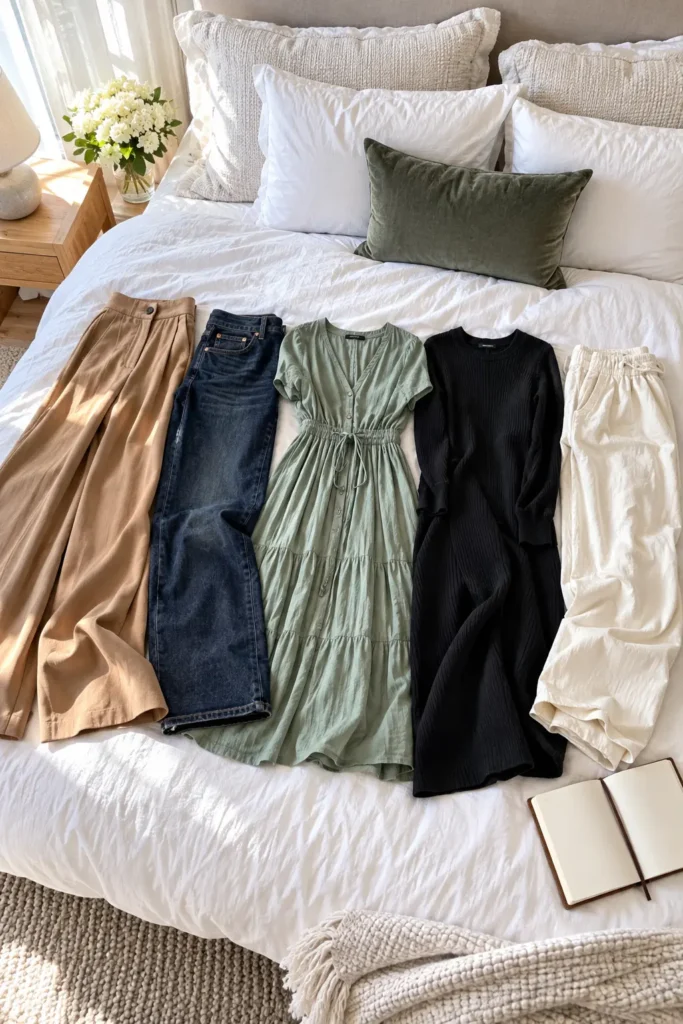
Lay them side by side on the bed. Favorites almost always share something, and it’s rarely what you’d guess. For each piece, write one short note on:
- the fabric (stretchy, crisp, soft knit)
- the length or rise
- the main reason you grab it
If four of the five are pants, treat that as information, not a verdict. Maybe it’s the pockets you love. A dress with pockets might win you back.
Sit, bend, and climb stairs in each piece before you judge it

If you judge clothes standing still in front of a mirror, you’re testing them for the one thing you do least all day. Put on each of your five pieces and run through three moves. Sit on a low chair for 2 minutes, then pick something up off the floor, then climb one flight of stairs.
Watch for a waistband that rolls, a hem that rides up higher than you like, or fabric that pulls tight across your hips or back. Mark each piece pass or fail on your list.
Pro Tip
Do this test in the shoes you’d really wear with each outfit. A dress that feels fine with sneakers can feel very different on stairs in low heels.
Also Read: How to Build a Timeless Wardrobe After 50 and Pick the Trends Worth Buying
Write down your three comfort deal-breakers
You can put up with some kinds of discomfort all day. Others will have you changing clothes by lunch. Think back over the last month and name the three that always win. Cold legs, a waistband that digs in after meals, and arms you’d rather keep covered are common ones. Those three go at the top of your page.
Heads Up
If your ankles or legs swell by evening, a tight waistband or snug hem can make it feel worse. Look for elastic or side-zip waists and looser leg openings. If the swelling is new, or only shows up in one leg, check with your doctor before you blame the clothes.
Wear a dress and a pants outfit to the same kind of day
Testing a dress at Sunday brunch and pants on a rainy Monday doesn’t tell you much, because the weather and the setting end up deciding for you. Pick something you do at least twice a week, like work days or errand mornings. Wear a dress the first time and pants the second. To keep the test fair, keep these the same both times:
- your shoes
- your outer layer
- your bag
Don’t own a dress you like? A long knit top with leggings is a fair stand-in for now. Write a few words about each day that evening, while you still remember it.
Score each outfit on comfort, confidence, and effort
Give each outfit three scores from 1 to 5, one for each category. Comfort is how your body felt at the end of the day. Confidence is how you felt walking into a room. Effort counts everything it took: ironing, the right undergarments, the right shoes, a second look in the mirror. Add the three numbers, so each outfit gets a total out of 15. Do the dress day and the pants day on the same page so you can see them side by side.
Pro Tip
Not sure about your confidence score? Count how many times you tugged at, smoothed, or adjusted the outfit. More than three times usually means a 2 or lower.
Set your own dresses vs pants over 50 ratio
The math here is rough on purpose. Average your dress totals and your pants totals from the test days, then compare the two numbers. If pants averaged 12 and dresses averaged 9, lean toward pants without giving up dresses entirely. Turn that into a plan for a 7-day week:
- clear winner by 4+ points: about 5 to 2
- winner by 2–3 points: about 4 to 3
- within 1 point: an even split
Write your ratio at the top of the page.
Buy one bridge piece that covers both moods

When your scores come out close, one piece that lives between the two will get worn more than anything else you own. Good bridge pieces include pull-on wide-leg trousers that move like a skirt, a soft jumpsuit, or a midi dress with pockets. Check secondhand shops first. Spending $15 on a test is easier to live with than spending $90.
Pro Tip
Run the sit, bend, and stairs test from earlier in the fitting room before you pay. If the store has no stairs, step up onto the bench a few times instead.
Check your ratio again after 30 days
Bodies, schedules, and weather all change, and a ratio that felt right in October can feel off by late November. Set a phone reminder for 30 days from today. When it goes off, track one more ordinary week the same way you did at the start: what you wore, where you went, and whether you changed early.
Compare that count to the ratio at the top of your page. If real life is off by 2 or more days in either direction, move your ratio to match what you actually wore. Your closet should follow your habits, not the other way around.
Frequently Asked Questions
Are midi dresses better than knee-length dresses after 50?
Not by default. Midi lengths keep your knees covered and feel warmer, so many women like them, but if you’re under about 5’3″, a knee-length hem can look more balanced. Try both with the sit, bend, and stairs test and go with the one that scores higher.
Do wide-leg pants make you look shorter?
They can if the hem hits above your ankle. Choose a length that nearly reaches the floor in the shoes you’ll wear most, and add a small heel or platform if you want more height.
What if I love dresses but my legs get cold?
Wear fleece-lined tights, knit dresses in thicker fabric, or knee-high boots from October through March. A slim pair of leggings under a midi dress works too, and nobody will see them.
Do jeans count as pants in this test?
Yes. If jeans are what you reach for on pants days, use them in your test. Comparing a dress to trousers you never wear won’t give you a useful score.
Is there an age when dresses stop working?
No. What changes over time is fabric, fit, and comfort, not some cutoff date. A dress that passes your three deal-breakers works at 52 or at 82.
Conclusion
You now have something most style advice never gives you: an answer that comes from your own week instead of someone else’s opinion. The dresses vs pants over 50 question is settled for your closet, and you have numbers to back it up. Next, take your ratio with you the next time you shop, and pass on anything that doesn’t fit it. If this helped, save it to your style board so it’s easy to find in 30 days.